RapidBolt
The short answer
For stocked grades, certified stud bolts dispatched from our Brisbane hub typically clear into Singapore within 3–5 working days by air freight, or 10–18 days port-to-port by sea depending on the sailing. The freight is rarely the constraint. What delays Singapore shipments is almost always documentation: an incomplete certification pack, a mismatched commercial invoice, or a heat number on the certificate that does not match the marking on the stud.
On a Jurong Island turnaround, the bolting does not arrive when the plane lands. It arrives when QA has accepted the certification pack.
Realistic lead times into Singapore
| Scenario | Typical timeline | Notes |
|---|---|---|
| Stocked grades, air freight | 3–5 working days from dispatch | B7, B7M, B8M Cl.2, standard imperial and metric sizes |
| Stocked grades, sea freight | 10–18 days port-to-port | Consolidated sailings from Brisbane and Sydney to Port of Singapore |
| Coated fasteners (Xylan, zinc-flake) | Add 5–10 working days | Coating application and cure before certification release |
| Super duplex / nickel alloy, ex-stock | 5–8 working days by air | Subject to size and PMI verification |
| Made-to-order exotic grades | 4–10 weeks | Mill melt, test and certification cycle drives the timeline |
| Emergency / plant-down supply | Same-day dispatch where stock allows | See emergency supply |
The documentation pack Singapore QA expects
Singapore refinery, petrochemical and shipyard QA departments work to a tighter documentation standard than most markets. A pack that gets accepted first time normally contains:
- EN 10204 3.1 material test certificate (or 3.2 where a third-party inspector is nominated), traceable to the heat number stamped on each stud
- PMI (positive material identification) report — effectively mandatory for duplex, super duplex and nickel alloys
- Hardness results where the scope is sour service under NACE MR0175 / ISO 15156, confirming B7M at or below 235 HBW
- Dimensional and thread inspection report against ASME B1.1 or ISO 261 as applicable
- Coating certification where a fluoropolymer or zinc-flake system is specified, including film thickness
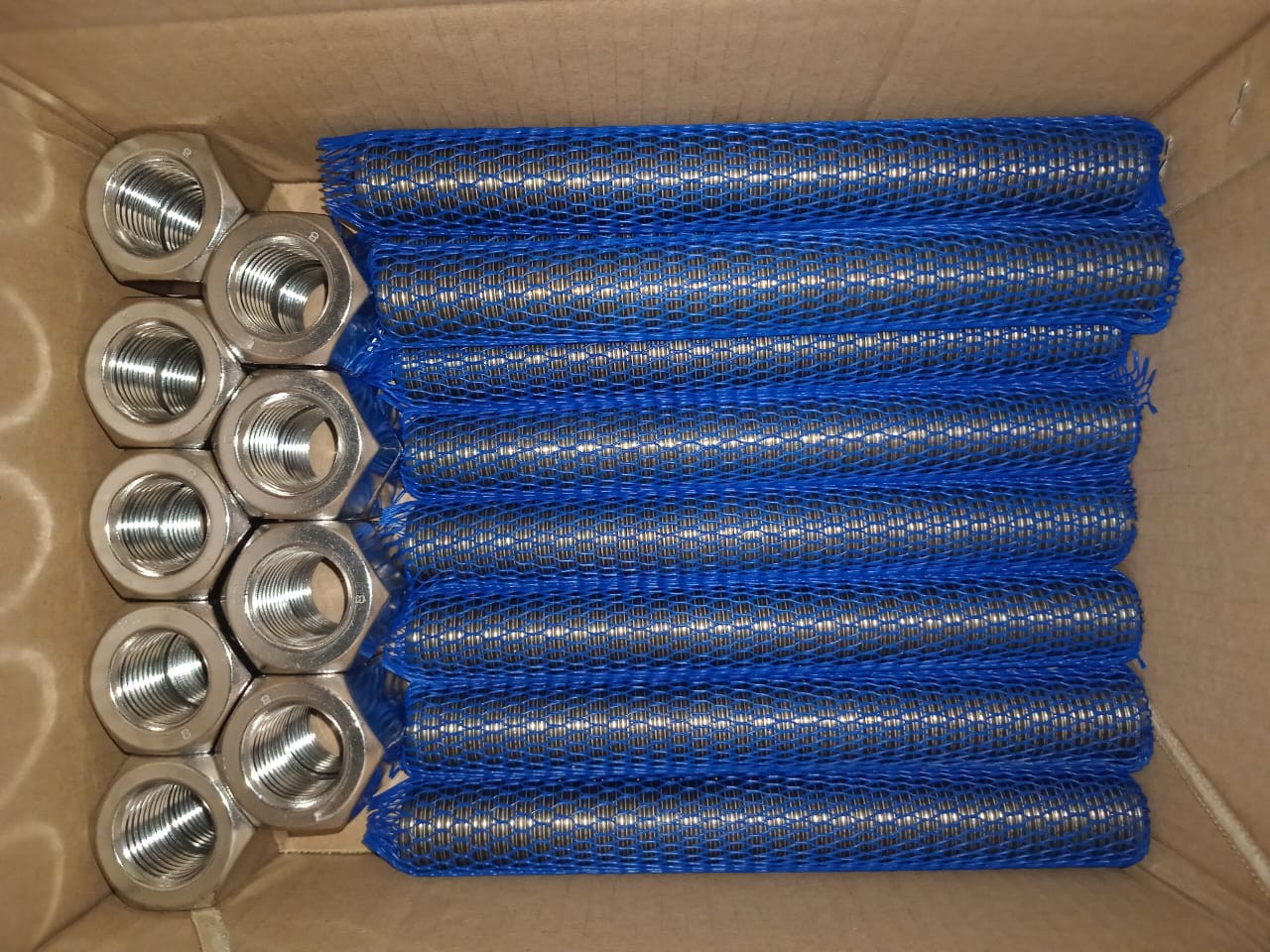
- Packing list keyed to the joint list, so bagged and tagged kits can be verified against the isometric without unpacking
- Certificate of origin and commercial invoice matching the HS code and Incoterm on the purchase order
We transmit the pack electronically before dispatch, not with the goods. That single sequencing decision is what allows QA review and customs clearance to run in parallel with freight rather than after it.
Incoterms: what to ask for and why
Most Singapore enquiries arrive asking for CIF, and CIF is usually the right answer for planned scopes — it puts sea freight and marine insurance on us and lands the goods at the Port of Singapore under a single price. Where the scope is time-critical, DAP to the plant gate or the fabrication yard removes the final-mile coordination from your team entirely. FOB and EXW make sense only when your own freight forwarder already has a consolidation running.
Whichever term you nominate, quote it explicitly on the purchase order. A term mismatch between the PO and the commercial invoice is one of the most common causes of a shipment sitting at the border.
Grade selection for Singapore conditions
Singapore combines year-round humidity, salt-laden air and continuous process duty. That pushes grade selection harder than the same plant would in a dry inland environment:
- ASTM A193 B7 / B7M for standard and sour process flange duty — almost always coated rather than bare in this atmosphere
- A193 B8M Class 2 for corrosive and chloride-bearing service where austenitic stainless is specified
- Super duplex UNS S32750 / S32760 for seawater cooling, produced water and firewater systems
- Inconel 718 / 725 where high temperature or sour conditions rule out lower alloys
- Xylan or zinc-flake coatings on carbon and alloy steel to survive tropical marine exposure and allow repeat breakout
Four mistakes that cost Singapore projects days
- Ordering bolting before the joint list is final. Kitting to a superseded isometric means re-picking on arrival, in a country where labour hours during a turnaround are the most expensive thing on site.
- Accepting a 2.2 certificate where 3.1 is specified. It will be rejected at QA review, and re-certification after the fact is often impossible.
- Leaving the coating decision to the end. Coating adds a week; deciding it late converts a comfortable schedule into an air freight bill.
- Splitting a single joint across two shipments. Studs, nuts and gaskets should travel together. A complete joint late is better than three-quarters of a joint early.
How EMG supplies Singapore
We supply stud bolt kits, gaskets and special fasteners into Jurong Island, Tuas, Pasir Panjang and the Sembawang and Loyang yards, kitted to the joint list and certified before dispatch. Full detail on grades, ports and terms is on our Singapore supply page, and the wider export capability on our Asia-Pacific supply hub.
Send us the joint list, the specification and your required on-site date — request an export quote and we will come back with the grade confirmation, certification scope and a delivered date you can plan against.