Back to Products

    Wedge-Locking Washers for Vibration-Critical Bolted Joints

    Nord-Lock type wedge-locking washer pairs that secure bolted joints with tension rather than friction — supplied for pumps, compressors, crushers, rail and structural connections across Australia and Asia-Pacific.

    Industrial washers and heavy hex nuts used in vibration-resistant bolted assemblies
    Wedge-locking washer pairs supplied matched to bolt grade and finish
    EN 10204 3.1 Certified
    ISO 9001 Quality
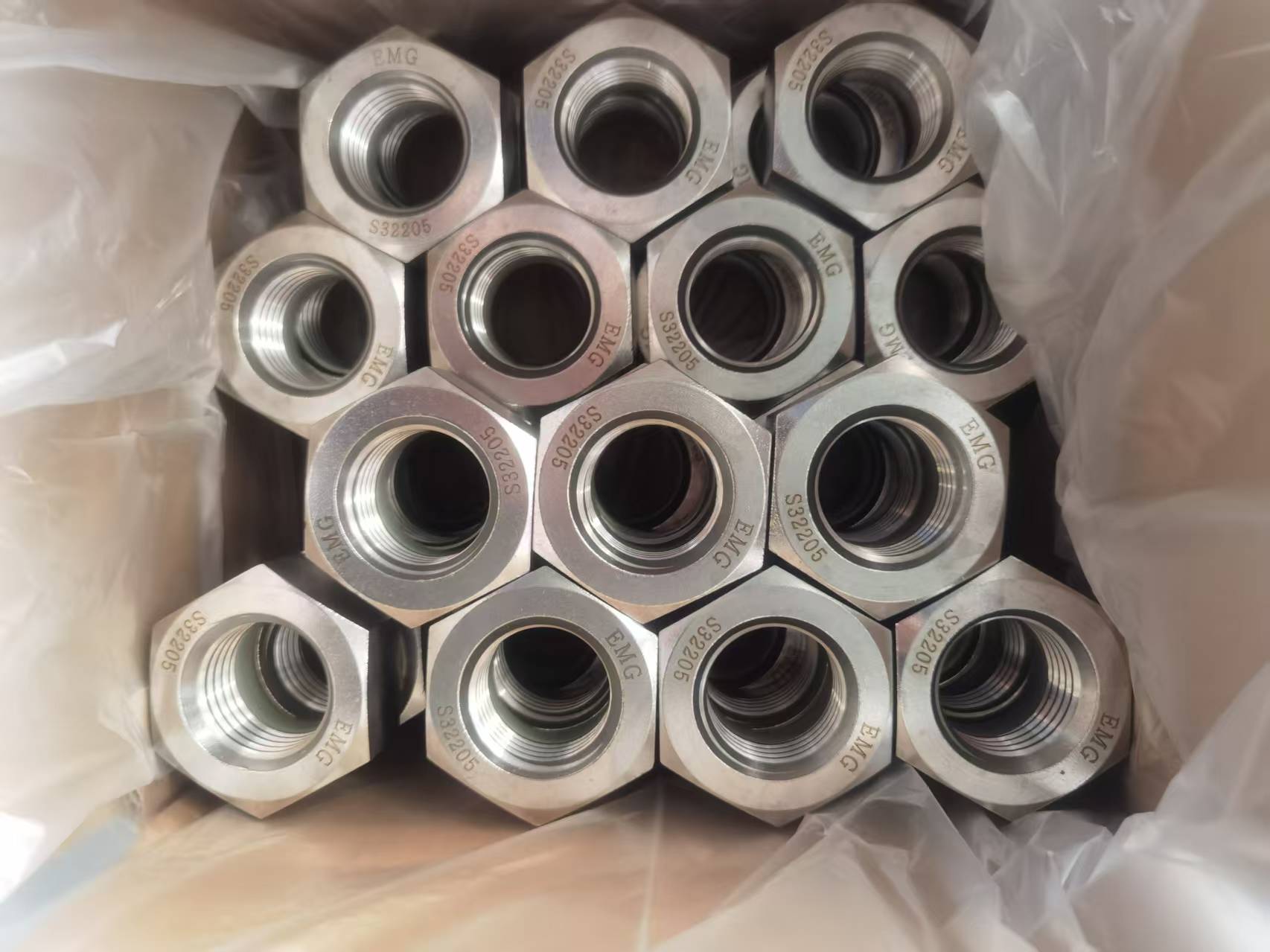
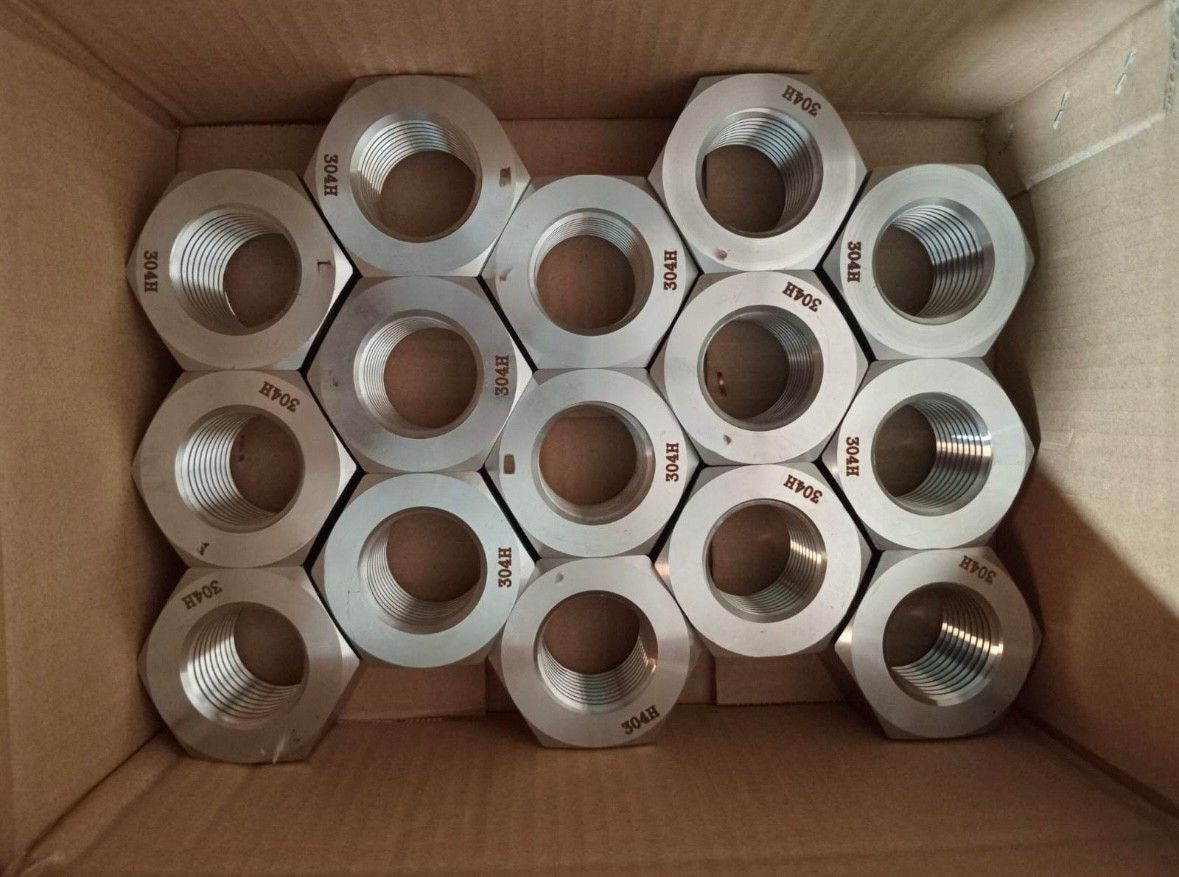
    Heavy hex nuts staged for assembly with locking washers
    Locking washers supplied as complete bolt, nut and washer sets

    Overview

    Wedge-locking washers are supplied in pairs, with cams on the inner faces and radial teeth on the outer faces. Because the cam angle is greater than the thread pitch, any attempt by the bolt or nut to rotate loose forces the cams to climb, increasing tension in the joint instead of releasing it. The radial teeth grip the bolt head and the mating surface so the pair only moves against itself. This makes the locking function independent of friction, so it is unaffected by lubrication, coatings or repeated tightening cycles — the reason wedge-locking washers replaced spring, serrated and nylon-insert locking devices in most vibration-critical maintenance specifications. Nord-Lock® originated the technology; EMG supplies wedge-locking washers of this type alongside the studs, bolts and nuts they are installed with, so the entire joint arrives as one certified set.

    Wedge-locking washers secure a bolted joint with tension, not friction — which is why their locking function is unaffected by lubrication, coating or vibration.

    Typical Applications

    • Rotating equipment: pump baseplates, compressor mounts, fan and blower housings
    • Mining and quarry plant: crushers, screens, conveyor structures and liner bolting
    • Rail, transit and heavy vehicle assemblies subject to continuous dynamic load
    • Wind, hydro and turbine auxiliaries where joint relaxation drives unplanned outages
    • Structural and secondary steel connections where re-torquing access is limited
    • Skid, package and modular equipment shipped and commissioned under vibration

    Wedge-Locking Washer Types We Supply

    • Standard wedge-locking washer pairs, glued in pairs for first-time installation (M3–M39 / 1/4"–1-1/2")
    • SP type with enlarged outer diameter for soft, painted or oversized-hole surfaces
    • X-series conical washers for joints exposed to both vibration and joint relaxation
    • Large-diameter wedge-locking washer pairs for heavy structural and flange bolting
    • Matched sets supplied with ASTM A193 studs, hex bolts and A194 nuts
    • Coated bolt and washer combinations where cathodic or barrier protection is specified

    Common Materials & Grades

    Carbon steel, Delta Protekt coated316 / A4 stainless steel254 SMO (high-chloride service)Duplex 2205Super Duplex 2507Inconel 718Hot dip galvanised bolting setsXylan 1424 coated bolting sets

    Standards & Documentation

    • EN 10204 3.1 material certification on the bolting supplied with each washer set
    • Hardness and dimensional inspection records available on request
    • ISO 9001:2015 certified quality management system
    • Bolt tightening to the joint designer's torque specification — washer pairs do not change the required bolt preload method
    • Supplied with heat-number traceable studs and nuts where full assembly traceability is required

    NEED MACHINED COMPONENTS TOO?

    Spacers, blinds, special nuts, shafts and bushes — supplied to your drawing with the same traceability as your bolting. Precision Machined Components →

    Why bolted joints loosen, and what wedge-locking actually solves

    Self-loosening and slackening are two different failure modes. Self-loosening is rotational: transverse vibration or dynamic load makes the nut or bolt head turn relative to the joint, and preload is lost quickly. Slackening is non-rotational: embedding, gasket creep, settlement or thermal cycling reduce preload without anything turning. Wedge-locking washers address the first mode directly — the cam geometry makes rotational loosening mechanically impossible while the joint remains intact. They do not compensate for a joint that relaxes because of creep or embedment. Where both mechanisms are present, conical X-series type washers add a spring effect that maintains some preload as the joint settles, which is why they are the usual selection for painted surfaces, castings, softer materials and joints with short clamp length.

    Selecting between standard, SP and X-series washers

    Standard wedge-locking washers suit hardened, machined and steel surfaces where the outer teeth can bite. SP washers use the same cam geometry with a larger outer diameter and are chosen for softer or painted surfaces, oversized or slotted holes, and where bearing pressure must be spread. X-series conical washers are specified when the joint is exposed to vibration and relaxation together, or where surface hardness is marginal. Material selection follows the joint environment, not the bolt: 316 stainless for washdown and marine exposure, 254 SMO or super duplex for high-chloride and offshore service, and Delta Protekt coated carbon steel for general industrial use. Mixing carbon steel washers under stainless bolting in a wet environment invites galvanic attack at exactly the point you need contact integrity.

    Installation, reuse and torque

    The washers install in pairs, cam face to cam face, with the toothed faces against the bolt head or nut and against the joint surface. Supplied pairs are glued together only to make first-time handling easier; the adhesive has no locking function and does not survive the first installation. The joint is tightened to the torque specified by the joint designer for the bolt grade, size and lubrication condition — a wedge-locking washer is not a substitute for correct preload, and it does not change the target preload. Removal uses ordinary hand tools; the untightening torque is higher than the tightening torque, which is normal and is how you can tell the wedge is working. Reuse is possible where the cams and teeth are visually undamaged, but for safety-critical bolting most maintenance specifications treat locking washers as consumables replaced at every disassembly.

    How EMG supplies wedge-locking washers

    We supply wedge-locking washers as part of a complete bolting set rather than as a loose line item. That means the washer type, material and finish are selected against the stud or bolt grade, the coating, the mating surface and the environment, and the whole set is despatched together with the certification package. For shutdowns and turnarounds this matters more than unit price: a crate of studs that arrives without the matching locking washers, or with washers in the wrong material, stops the same job as no studs at all. Send the bolting schedule, joint drawings or equipment reference and we will return a quote with washer type, material, quantities and lead times stated line by line. We are not the manufacturer of Nord-Lock® branded product; where a specification names a proprietary brand we will say so plainly and quote the equivalent we can certify.

    FREQUENTLY ASKED QUESTIONS

    Technical FAQs

    How do wedge-locking washers stop bolts from vibrating loose?

    +
    They work in pairs with cams facing each other. The cam angle is greater than the thread pitch, so if the bolt or nut tries to rotate loose the cams must climb over each other, which increases tension in the joint rather than releasing it. Radial teeth on the outer faces grip the bolt head and the joint surface so the pair can only move against itself.

    Are wedge-locking washers affected by lubrication?

    +
    No. Because the locking action is mechanical — tension created by cam geometry — it does not rely on friction between surfaces. This is the key difference from spring, serrated and toothed locking washers, whose effectiveness drops sharply on lubricated, coated or hardened surfaces.

    What is the difference between standard, SP and X-series wedge-locking washers?

    +
    Standard washers suit hardened and machined steel surfaces. SP washers share the same cam geometry with a larger outer diameter for soft, painted or oversized-hole applications where bearing pressure must be spread. X-series washers add a conical shape that maintains preload where the joint is exposed to both vibration and relaxation, such as painted surfaces, castings and short clamp lengths.

    Can wedge-locking washers be reused?

    +
    They can be reused where the cams and radial teeth show no visible wear or damage, and they must always be reinstalled in pairs, cam face to cam face. For safety-critical bolting in oil and gas, LNG and mining applications, most maintenance specifications treat locking washers as consumables and replace them at each disassembly.

    Do wedge-locking washers change the tightening torque?

    +
    No. The joint is still tightened to the torque or preload specified by the joint designer for that bolt grade, size and lubrication condition. Untightening torque will be noticeably higher than tightening torque — that is expected and confirms the wedge effect is engaged.

    Which materials are available for corrosive and offshore service?

    +
    316 stainless steel for washdown and coastal exposure, 254 SMO or super duplex 2507 for high-chloride and offshore service, Inconel 718 for elevated temperature, and Delta Protekt coated carbon steel for general industrial use. Washer material should be compatible with the bolting material to avoid galvanic attack at the contact faces.

    Do you supply Nord-Lock washers in Australia?

    +
    We supply wedge-locking washers of the Nord-Lock type — standard, SP and conical X-series equivalents — matched to the studs, bolts and nuts they are installed with, delivered Australia-wide and across Asia-Pacific. Nord-Lock® is a registered trademark of the Nord-Lock Group and we are not the manufacturer; where a specification names that brand we will confirm exactly what we are quoting so procurement and engineering can approve it before order.
    GET IN TOUCH

    Need a Quote for Wedge-Locking Washers?

    Send us the size, grade and quantity — or your drawings and bill of materials — and we'll return a technical quote for wedge-locking washers with lead times and certification included.

    Emergency Support

    24/7 availability for critical projects