Back to Products

    ASTM A320 L7 and L7M Low Temperature Stud Bolts

    Charpy V-notch impact tested chromium-molybdenum studs for LNG, cryogenic and cold-climate flange bolting, supplied with matching A194 Grade 7 or 7M nuts.

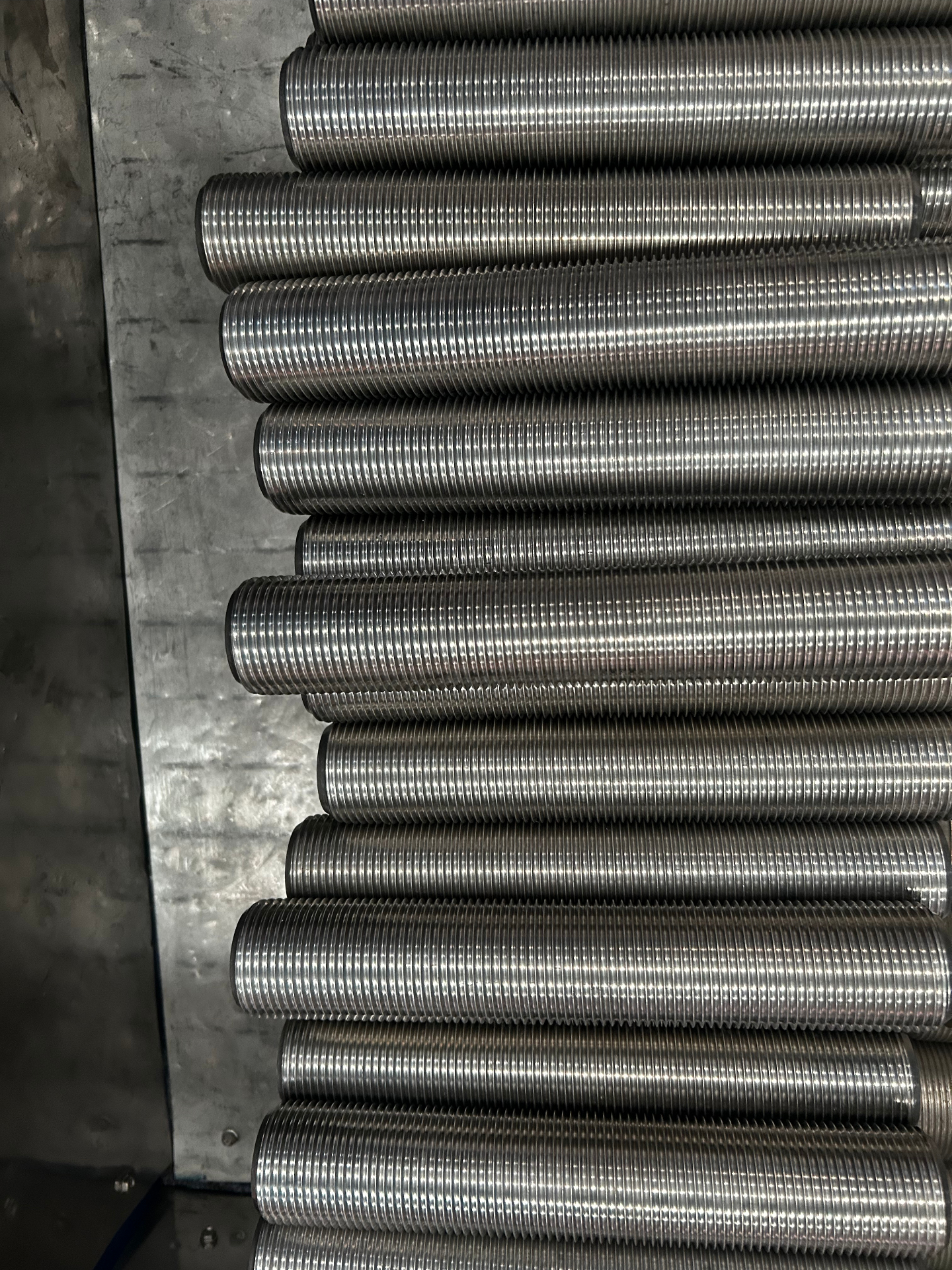
    Threaded ASTM A320 L7 stud bolts ready for low temperature service
    A320 L7 threaded studs supplied with full impact test certification
    EN 10204 3.1 Certified
    ISO 9001 Quality

    Overview

    ASTM A320 covers alloy steel bolting for low-temperature service, and Grade L7 is its most widely used variant. Chemically L7 is the same AISI 4140 chromium-molybdenum steel as A193 B7, with the same 862 MPa minimum tensile and 724 MPa minimum yield up to 2-1/2in diameter. The difference is qualification: A320 mandates Charpy V-notch impact testing, normally at minus 101 C with a minimum average of 20 J across three specimens, so the material is proven to retain toughness where B7 would behave in a brittle manner. L7M is the hardness-controlled sour service variant, and L43 uses AISI 4340 to hold strength in larger diameters. EMG supplies all three with impact test reports on the EN 10204 3.1 certificate.

    A320 L7 and A193 B7 share a chemistry but not a qualification — L7 is Charpy impact tested at minus 101 C, which is the only evidence a cryogenic joint will accept.

    Typical Applications

    • LNG liquefaction train and loading line flange bolting
    • Cryogenic valve, expander and cold box connections
    • Ethylene and ammonia refrigeration circuit bolting
    • Air separation and industrial gas plant piping
    • Autorefrigeration-exposed depressurisation and relief systems
    • Cold-climate and Antarctic infrastructure bolting

    A320 Configurations We Supply

    • Continuous thread A320 L7 studs cut to project length
    • Double-end A320 L7 studs with defined grip length
    • A320 L7M hardness-controlled studs for sour plus low temperature duty
    • A320 L43 studs where higher strength is needed in large diameters
    • Complete kits with A194 Grade 7, 7M or 4 heavy hex nuts
    • Coated L7 kits with the coating system applied to customer specification

    Common Materials & Grades

    ASTM A320 L7ASTM A320 L7MASTM A320 L43ASTM A194 Grade 7 nutsASTM A194 Grade 7M nutsASTM A320 B8 Class 2

    Standards & Documentation

    • ASTM A320/A320M for alloy steel and stainless steel bolting for low temperature service
    • Charpy V-notch impact testing per heat, normally at minus 101 C, results stated on certificate
    • ASTM A194 Grade 7 or 7M nuts, impact tested to the same temperature where specified
    • EN 10204 3.1 mill test reports including chemistry, mechanicals and impact energies
    • Heat number traceability through heat treatment, testing and coating
    • EN 10204 3.2 third-party witnessed certification available for LNG project scopes

    NEED MACHINED COMPONENTS TOO?

    Spacers, blinds, special nuts, shafts and bushes — supplied to your drawing with the same traceability as your bolting. Precision Machined Components →

    What impact testing actually proves

    Ferritic steels lose toughness as temperature falls and transition from ductile to brittle fracture. Above the transition temperature a flawed stud yields and deforms; below it, the same flaw can propagate as a fast brittle fracture at loads well inside the elastic range. Charpy V-notch testing measures absorbed energy at the design temperature and demonstrates where the material sits on that curve. A320 requires three specimens per heat with a minimum average of 20 J and no single value below 16 J at the qualification temperature, which is why an L7 certificate carries information a B7 certificate simply does not.

    Choosing between L7, L7M and L43

    L7 is the default for LNG and cryogenic service to minus 101 C. L7M applies where the low-temperature joint is also in wet H2S service: hardness is capped at 235 HBW and strength drops accordingly, and impact testing is performed on the tempered condition. L43 substitutes AISI 4340, which through-hardens better and therefore maintains the full 862 MPa tensile into larger diameters where L7 would be derated. On large LNG flanges above 2-1/2in, L43 often lets the original bolt load be retained without increasing stud diameter.

    Nuts and washers for low temperature joints

    L7 studs mate with A194 Grade 7 nuts and L7M with Grade 7M. Where the specification requires it, nuts are impact tested at the same temperature as the studs. Standard A194 2H nuts are not qualified for low-temperature service and must not be used to complete an A320 joint. Washers, when required, should be a low-temperature qualified grade rather than generic hardened washers. EMG assembles the complete kit and certifies the components together so a site inspector is not left reconciling separate documents.

    Coating and installation in cryogenic service

    Coatings on cryogenic bolting are specified by the client and applied without substitution. Thermal contraction matters at these temperatures: a flange cooling from ambient to minus 160 C loses bolt load as the joint contracts, so tightening procedures and gasket selection must anticipate the relaxation. Ask us for the coating friction data with the certification pack so torque values used at ambient reflect the system actually applied to the studs.

    FREQUENTLY ASKED QUESTIONS

    Technical FAQs

    What is the difference between A193 B7 and A320 L7 stud bolts?

    +
    The chemistry and mechanical properties are effectively identical. A320 L7 adds mandatory Charpy V-notch impact testing, normally at minus 101 C, qualifying it for low-temperature service. A193 B7 is limited to about minus 29 C because it carries no impact qualification.

    At what temperature are A320 L7 studs impact tested?

    +
    Minus 101 C is the standard qualification temperature, with a minimum average of 20 J from three specimens and no single value below 16 J. Testing at other temperatures can be arranged where a project specification nominates a different design minimum.

    Which nuts should be used with A320 L7 studs?

    +
    ASTM A194 Grade 7 heavy hex nuts, or Grade 7M with L7M studs. Where the specification requires it we supply nuts impact tested at the same temperature as the studs. A194 2H nuts are not acceptable on an A320 joint.

    When should L43 be specified instead of L7?

    +
    In diameters above 2-1/2in where L7 mechanical properties are derated. L43 uses AISI 4340, which through-hardens more effectively and holds the higher strength band into larger sections, letting large LNG flanges keep their design bolt load.

    Can you supply A320 L7 studs for LNG projects with 3.2 certification?

    +
    Yes. EN 10204 3.2 witnessed certification, material data sheets and qualification test records are routinely supplied for LNG scopes. Nominate the inspection authority at enquiry so witness points are built into the manufacturing programme.

    Do you hold A320 L7 in Australian stock?

    +
    Common LNG flange sizes are held in Australia, with additional inventory positioned for Gladstone, Darwin and Western Australian project work. Non-standard lengths and coated kits are manufactured to order, and urgent shutdown requirements go through RapidBolt.
    GET IN TOUCH

    Need a Quote for ASTM A320 L7 Stud Bolts?

    Send us the size, grade and quantity — or your drawings and bill of materials — and we'll return a technical quote for astm a320 l7 stud bolts with lead times and certification included.

    Emergency Support

    24/7 availability for critical projects