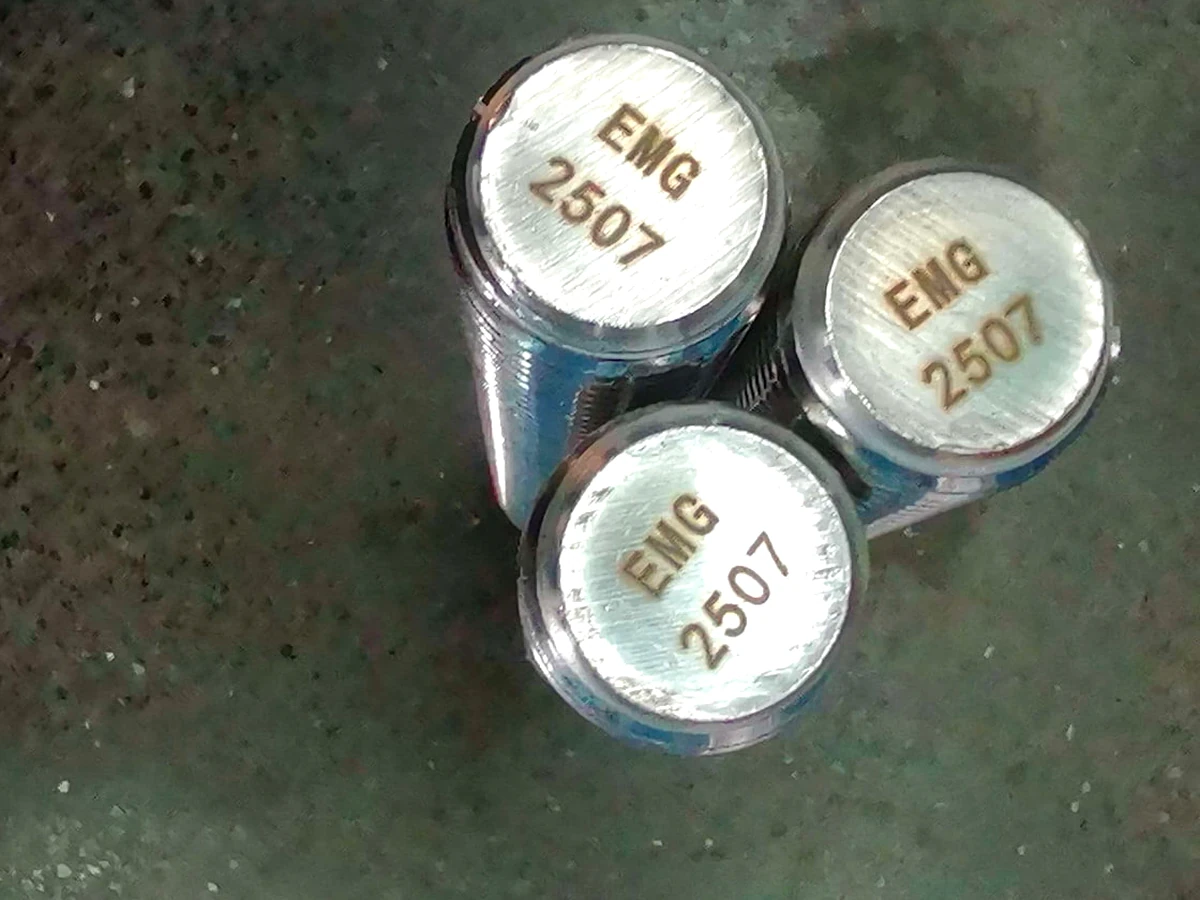
Three EMG hex bolt heads marked 2507 on a workshop surface
    AUSTRALIA / ASIA-PACIFIC / SPECIFICATION

    Sour-service bolting: define the requirement

    Sour-service acceptance depends on the applicable standard, actual environment and supplied material condition—not an alloy name or M suffix alone. Define the studs, nuts, heat treatment, hardness and inspection scope before requesting bolting for Australian or Asia-Pacific oil-and-gas projects.

    Request a Quote
    ENGINEERED SUPPLY, NOT OFF-THE-SHELFBUY-TO-ORDER, QUOTED LEAD TIMEAUSTRALIA / ASIA-PACIFIC
    SIDE BY SIDE

    The differences that matter

    Specification-led comparison. No automatic substitution or universal service approval.
    Enquiry detailDefine before quotation
    Governing requirementsApplicable project specification and NACE MR0175 / ISO 15156 requirements where invoked
    AssemblyStud and companion nut grade, drawing and dimensions
    ConditionSpecified heat treatment, hardness and mechanical acceptance
    EnvironmentActual service conditions provided by the responsible engineer
    RecordsMaterial certificates, heat traceability and agreed inspection/testing
    ENGINEERING BEFORE SUBSTITUTION

    Beyond the grade name.

    A comparison helps frame the enquiry. The responsible engineer approves the material, condition and finished assembly.

    Separate the grade from the service approval

    B7M/2HM, L7M and selected nickel alloys may appear in project material schedules, but the grade designation does not establish universal sour-service suitability. Confirm the applicable condition and environmental restrictions with the responsible engineer.

    Where another sour-service standard is invoked, identify it explicitly rather than treating standards as interchangeable. EMG’s quotation must reflect the actual purchase and inspection requirements.

    Certificates need an agreed scope

    An EN 10204 3.1 or 3.2 request identifies a documentation requirement, not a substitute for the material acceptance specification. Define the chemistry, treatment, hardness, mechanical tests and any witness requirements that must be evidenced.

    The existing Canadian sour-service page remains a separate regional reference. Australian and APAC enquiries can use this guide to assemble the requirement and then open the relevant grade-specific product page.

    PURCHASE ORDER CHECKPOINT

    Define it before ordering.

    Send the complete requirement for a defined quotation. EMG confirms the supply and inspection scope against your project documents.

    Request a Quote
    • Approved drawing revision, component quantities and required site date
    • Diameter, thread series, length and companion nut requirements
    • Governing product specification, alloy designation and supplied condition
    • Inspection, material certificates and project-specific acceptance requirements
    • Applicable service standard, actual environment, required hardness and test evidence

    Common questions

    Does a material certificate prove every sour-service requirement?

    No. Review its recorded condition and test results against the applicable service and project specification. Define the necessary evidence before ordering.

    Should sour-service nuts be checked separately?

    Yes. Specify the companion nut grade and its own condition, hardness and traceability alongside the studs. Assembly acceptance is not determined by the stud alone.

    Related products & project evidence

    TECHNICAL REFERENCES

    ISO — standards publisher

    References support material identification, not acceptance of a finished component. Use the applicable standard edition and approved project specification. Alloy trademarks remain the property of their respective owners.

    All technical guides