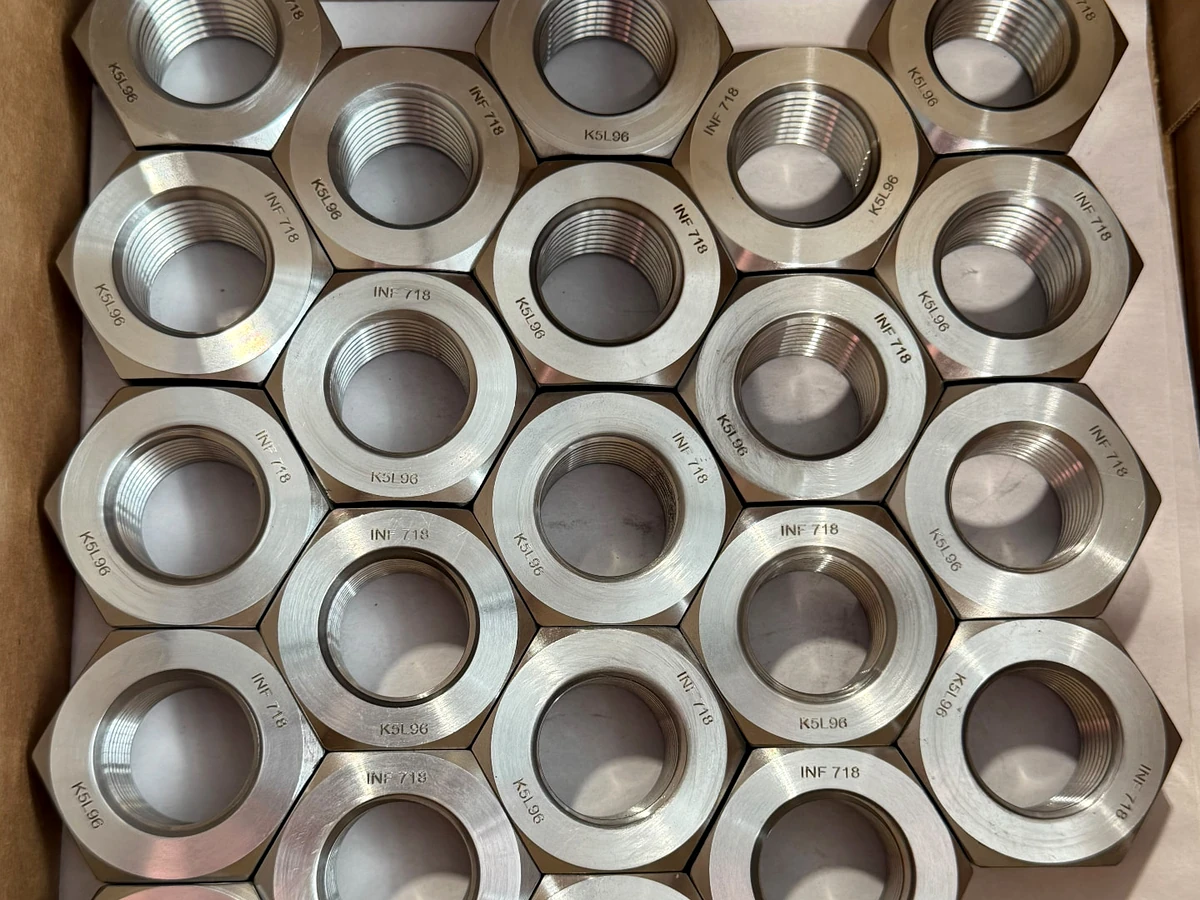
Hex nuts marked IN 718 with visible machined threads in a lined carton
    NICKEL ALLOYS / CRITICAL BOLTING

    Inconel 625 vs 718 vs 725

    Inconel 625 is primarily solid-solution strengthened, while 718 and 725 develop strength through controlled precipitation hardening. There is no universally best bolt grade: corrosion exposure, required strength, product specification and final condition must be evaluated together.

    Request a Quote
    ENGINEERED SUPPLY, NOT OFF-THE-SHELFBUY-TO-ORDER, QUOTED LEAD TIMEAUSTRALIA / ASIA-PACIFIC
    SIDE BY SIDE

    The differences that matter

    Specification-led comparison. No automatic substitution or universal service approval.
    RequirementInconel 625Inconel 718Inconel 725
    UNSN06625N07718N07725
    Strengthening routePrimarily solid solutionControlled precipitation hardeningAge hardening
    Project contextSpecified corrosion-exposed process hardwareSpecified loaded studs and power equipmentSpecified strength-and-corrosion oil and gas components
    Procurement checkProduct form and annealing conditionProduct specification and final treatmentSolution/ageing treatment and hardness
    Subsea/sour acceptanceProject review requiredCondition-specific review requiredEnvironment and condition review required
    ENGINEERING BEFORE SUBSTITUTION

    Beyond the grade name.

    A comparison helps frame the enquiry. The responsible engineer approves the material, condition and finished assembly.

    Is 718 better than 625 for bolts?

    A strength requirement alone is not the whole decision. 718 and 625 have different alloy chemistry and strengthening routes. The approved design must reconcile load, corrosion, material condition and component dimensions.

    ASTM B446 for 625 bar and ASTM B637 for specified 718 product requirements are procurement references already used on EMG’s material pages. A raw-material standard alone does not define all finished-bolt requirements.

    Subsea and cathodic protection need a specific review

    Record seawater exposure, cathodic protection and any hydrogen-related qualification requirements in the engineering review. Do not infer suitability from a generic nickel-alloy description or use the guide as an installation approval.

    For sour service, check the applicable NACE MR0175 / ISO 15156 requirements against the actual heat treatment, hardness and operating environment. EMG quotes against the agreed scope rather than choosing an alloy on behalf of the designer.

    PURCHASE ORDER CHECKPOINT

    Define it before ordering.

    Send the complete requirement for a defined quotation. EMG confirms the supply and inspection scope against your project documents.

    Request a Quote
    • Approved drawing revision, component quantities and required site date
    • Diameter, thread series, length and companion nut requirements
    • Governing product specification, alloy designation and supplied condition
    • Inspection, material certificates and project-specific acceptance requirements
    • Final treatment, hardness, service environment and any subsea qualification requirements

    Common questions

    Is Alloy 725 a replacement for 718?

    Not automatically. Both can be age hardened but have different compositions and project requirements. Substitution needs engineering approval and an agreed acceptance specification.

    What should an Inconel 718 bolt order specify?

    Specify UNS N07718, the governing product/project specification, final treatment, dimensions, mechanical and hardness requirements, quantity and inspection records.

    Can EMG quote all three alloys?

    EMG accepts specification-led enquiries for 625, 718 and 725 components. Product form, partner capability, certification and lead time are confirmed per quotation; this is not a stock listing.

    Related products & project evidence

    TECHNICAL REFERENCES

    Special Metals — INCONEL alloy 625Special Metals — INCONEL alloy 718Special Metals — INCONEL alloy 725

    References support material identification, not acceptance of a finished component. Use the applicable standard edition and approved project specification. Alloy trademarks remain the property of their respective owners.

    All technical guides