Why galvanised nuts are tapped oversize
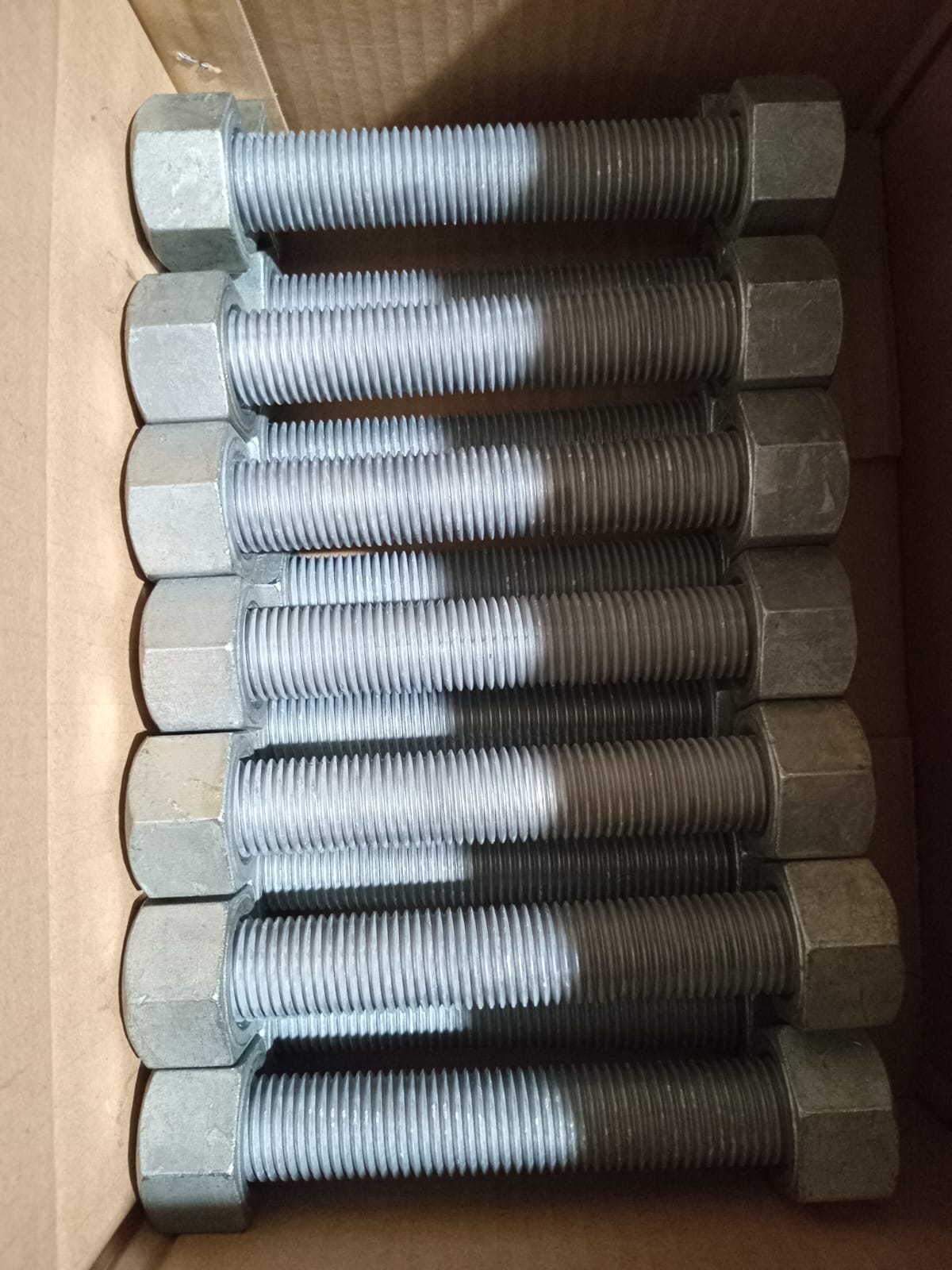
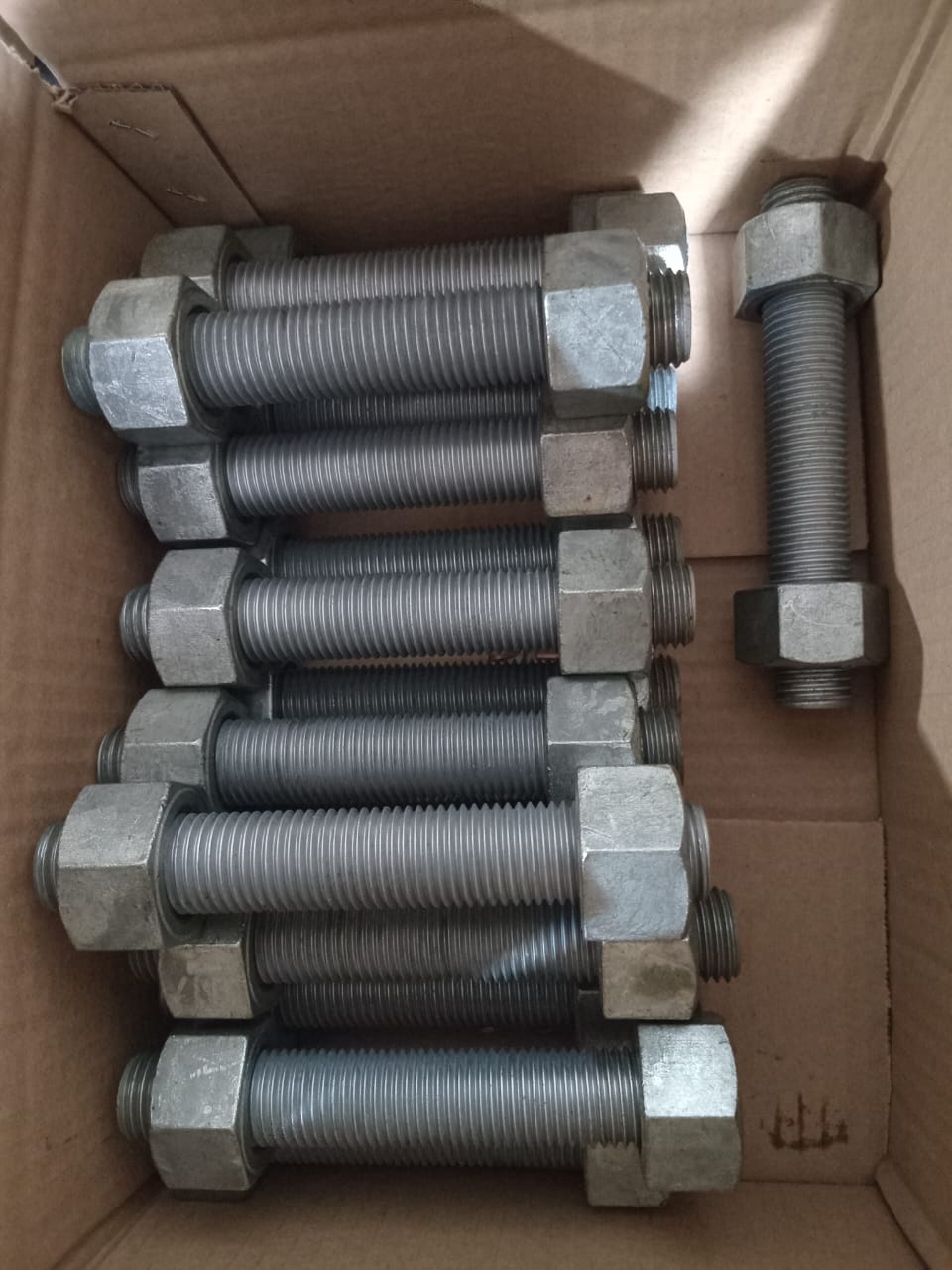
Molten zinc builds a substantial layer on every surface, including the thread flanks. If a nut were galvanised at its nominal thread size, the coated stud simply would not enter it. The standard solution is to galvanise the nut then re-tap it oversize, and to accept that the nut relies on the stud's coating plus a lubricant for corrosion protection in the thread. This is why galvanised studs and nuts should be bought as matched sets: mixing an oversize-tapped nut from one source with a stud coated to a different thickness elsewhere is where site assembly problems begin. Every HDG order we ship is fit-checked as an assembly before dispatch.
Hydrogen embrittlement and the hardness limit
Acid pickling before dipping charges hydrogen into the steel, and although the heat of the zinc bath drives much of it back out, high-hardness fasteners remain at risk of delayed brittle failure. As a rule, fasteners above roughly 34 HRC — including Grade 10.9, some quenched-and-tempered structural bolts and hardness-restricted grades — should not be hot-dip galvanised. Where a project needs both high strength and long corrosion life, zinc-aluminium flake systems such as GEOMET are the correct substitute because they are applied and cured without electrochemical hydrogen charging. We will flag this at quotation rather than coat something that should not be coated.
Coating life by environment
Zinc consumption rate drives service life, and it varies enormously by exposure. Inland rural and light industrial atmospheres consume zinc slowly, so a compliant AS/NZS 4680 coating can run for many decades. Coastal and marine atmospheric zones consume it far faster, and continuous immersion or splash-zone service faster again. Where the exposure is genuinely marine or chemically aggressive, hot-dip galvanising is often the wrong answer and a fluoropolymer system over an appropriate base metallurgy — or a corrosion-resistant alloy in the first place — will cost less over the asset life.
Torque behaviour differs from plated or coated finishes
Galvanised threads are rough and comparatively high friction, and the friction figure is less repeatable than a controlled fluoropolymer film. Galvanised assemblies are usually run with a thread lubricant, and torque values must be taken from a table written for lubricated galvanised hardware, not from a bare-steel or Xylan-coated table. For structural bolting, tension-control or turn-of-nut methods sidestep the issue entirely. Where a pressure-containing flange needs a verified friction figure, a coated system is the better technical fit than galvanising.
 RapidBolt