Back to Products

    Xylan & PTFE Coated Bolts

    Fluoropolymer coated bolting with a controlled, repeatable coefficient of friction — the offshore default for flanges that must be tensioned accurately and released years later.

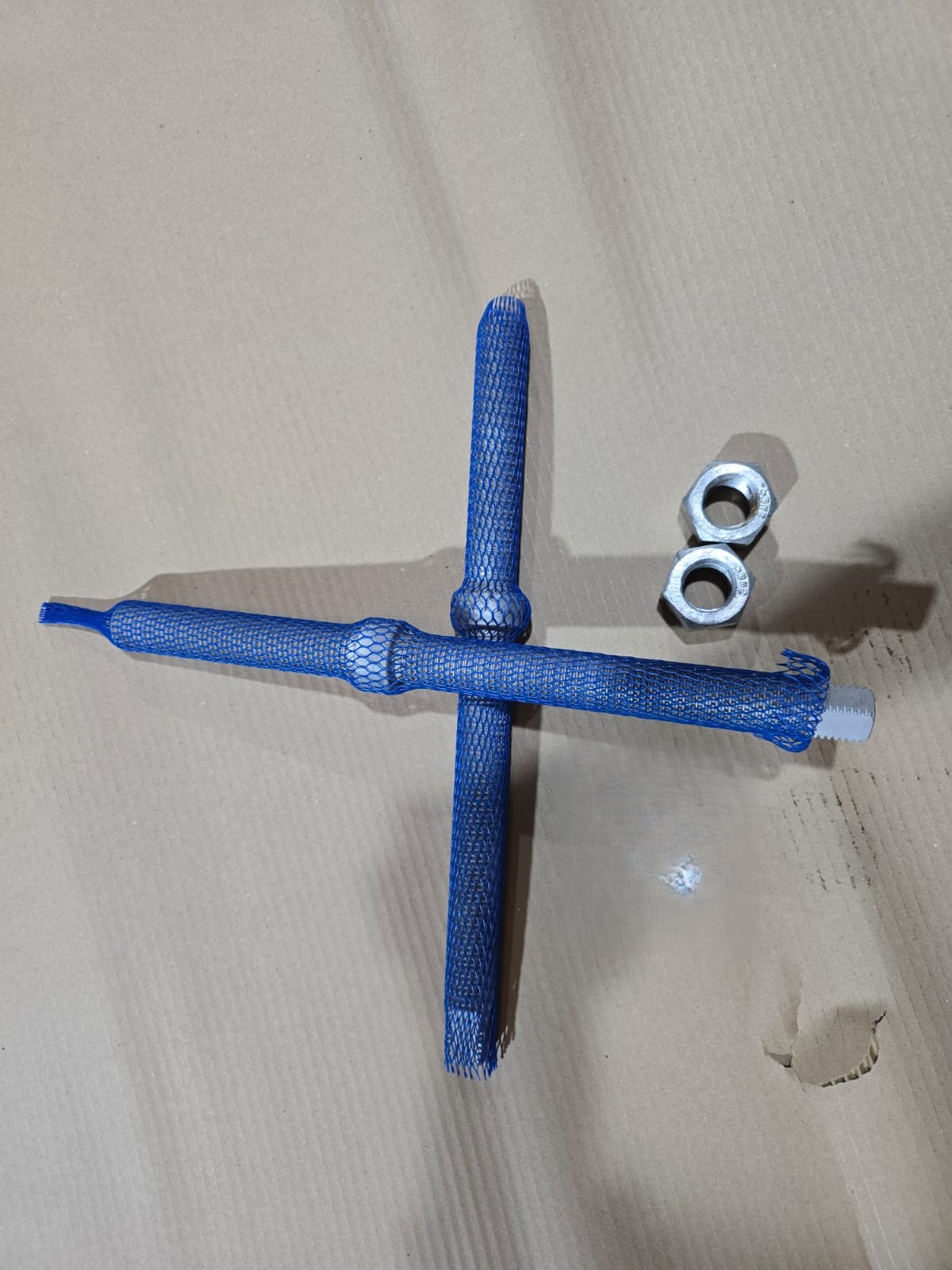
    Blue Xylan 1424 coated ASTM A193 B7M collar bolts
    Xylan 1424 coated B7M collar bolts — the blue finish specified across offshore bolting
    EN 10204 3.1 Certified
    ISO 9001 Quality
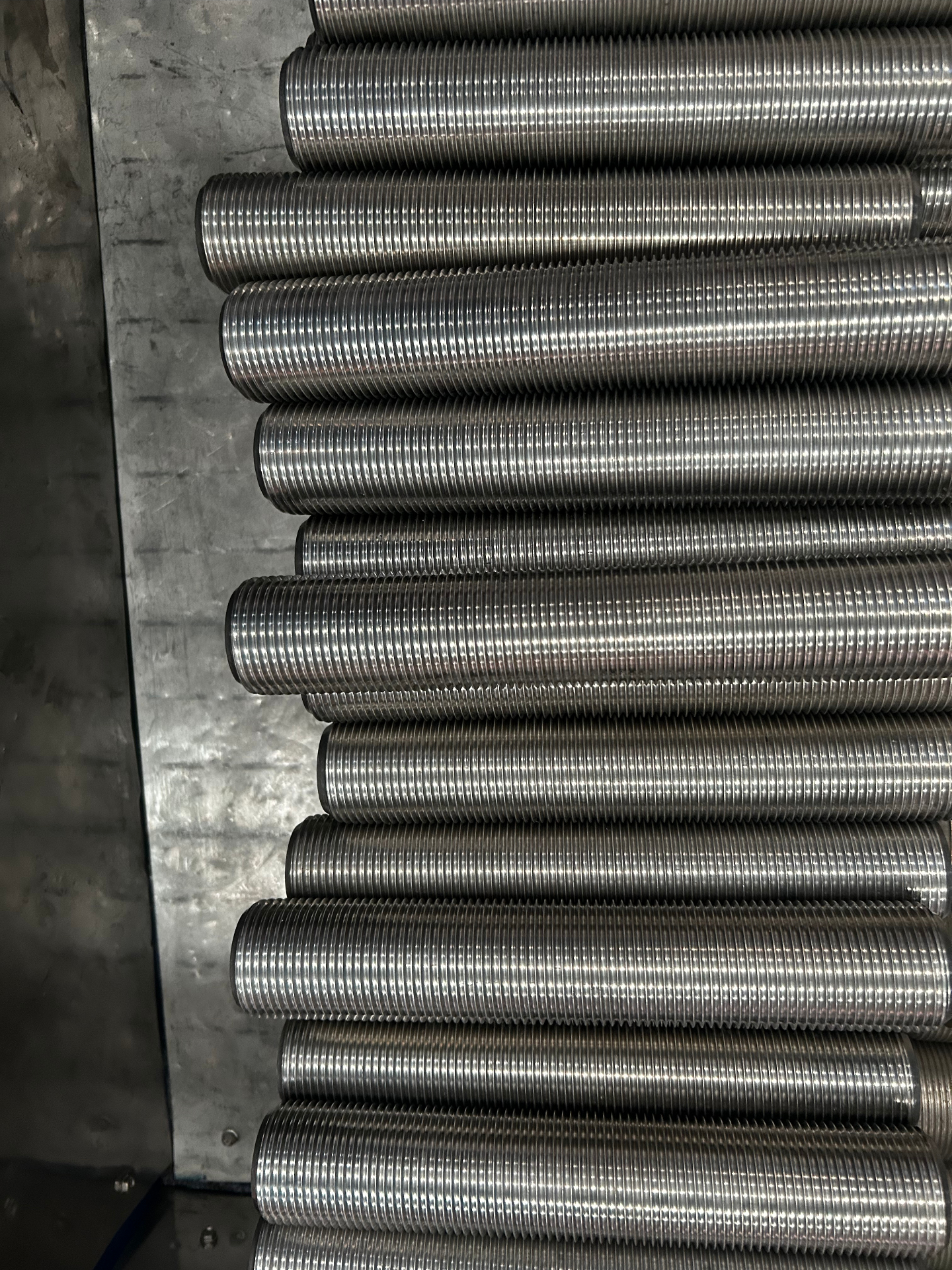
    Close-up of coated stud bolt threads showing uniform fluoropolymer film
    Uniform film thickness on the thread flanks keeps friction predictable

    Overview

    Xylan and PTFE are fluoropolymer coatings applied over a phosphate or blasted base, then oven cured to form a hard, low-friction film. Unlike sacrificial platings, they work as a barrier plus a dry lubricant, so the same coating that stops salt attack also gives a stable coefficient of friction. That matters on ASTM A193 B7 and B7M flange bolting, where the installed load is inferred from applied torque — an unpredictable thread friction figure means an unpredictable joint. It matters again years later at shutdown, when studs must be removed without cutting.

    Xylan 1424 typically delivers a coefficient of friction of 0.10–0.14, which is why it remains the reference coating for torque-controlled offshore flange bolting.

    Typical Applications

    • Offshore platform and topside flange bolting in the splash zone
    • Subsea manifolds, connectors and structural bolting
    • Torque-tension critical joints where a verified CoF is specified
    • Stainless, duplex and nickel alloy fasteners that gall when assembled bare
    • Chemical and hydrocarbon process piping exposed to aggressive media
    • Bolting scheduled for repeated shutdown removal and reuse

    Fastener Types We Supply

    • Stud bolts and threaded studs with heavy hex nuts
    • Hex bolts and set screws
    • Heavy hex nuts to ASTM A194 2H, 2HM, 8M
    • Hardened and structural washers
    • Collar bolts and headed studs for wellhead and valve service
    • U-bolts, eye bolts and bespoke machined items

    Common Materials & Grades

    Standards & Documentation

    • Coating applied by approved licensed applicators to the coating manufacturer's process sheet
    • EN 10204 3.1 material certification, 3.2 third-party witnessed on request
    • Dry film thickness and adhesion reporting per batch
    • Salt spray testing to ASTM B117 on request
    • Coefficient of friction test reports for torque-critical joints
    • Full heat-number traceability from mill to packed carton

    NEED MACHINED COMPONENTS TOO?

    Spacers, blinds, special nuts, shafts and bushes — supplied to your drawing with the same traceability as your bolting. Precision Machined Components →

    Xylan 1424 versus Xylan 1070 versus generic PTFE

    Xylan 1424 is the blue fluoropolymer most offshore specifications name by default: excellent salt spray life, a controlled friction figure and a service range of roughly −195 °C to +260 °C. Xylan 1070 is the black higher-temperature option, used where hot process piping or steam service would take 1424 past its limit. Generic PTFE or 'Teflon' coatings are typically specified where the primary objective is anti-galling on austenitic stainless, duplex or nickel-alloy fasteners rather than a certified friction figure. Where a project specification calls out a friction band, we supply the coating brand and system that carries test data for it rather than substituting a visually similar product.

    Why coating choice changes your torque figures

    A bolted flange is a spring: the target is bolt stress, and torque is only a proxy for it. Thread and nut-face friction absorb most of the applied torque, so a change in coating changes the load achieved at the same torque value. Bare or lightly oiled studs can sit around 0.16–0.20, fluoropolymer systems nearer 0.10–0.14, and dry PTFE lower again. Using a torque table written for one condition on hardware coated to another is a common cause of both leaking and over-stressed joints. We supply the coating data alongside the material certification so your bolting procedure can be written against the hardware actually installed.

    Coating hardness, handling and repair

    Fluoropolymer films are thin and thread-tolerant, but they are not indestructible. Studs dragged across steel decking or nuts run down with impact tools will show wear on the leading threads, and a damaged film is a local corrosion start point. Every coated order ships thread-protected and boxed by size and heat number, and we can supply matched touch-up material for site repair of handling marks. For hardware that will be repeatedly broken out and reused, we usually recommend re-coating rather than field patching once wear covers more than the first few threads.

    Base material still governs, not the coating

    Coatings buy corrosion life; they do not upgrade metallurgy. A Xylan coated carbon-steel B7 stud in a chloride-rich subsea environment will eventually fail if the film is breached, which is why aggressive service usually pairs the coating with an inherently resistant base such as super duplex or Inconel 625. Equally, ASTM A193 B7M and A320 L7 exist for hardness and low-temperature reasons that no coating addresses. We will always ask what the service condition is before quoting a finish, because the wrong pairing looks correct on paper and fails in the field.

    FREQUENTLY ASKED QUESTIONS

    Technical FAQs

    What is the coefficient of friction of Xylan 1424 coated bolting?

    +
    Typically 0.10 to 0.14 depending on applicator, film thickness and mating nut finish. Where your bolting procedure is written to a specific friction band, we can supply CoF test data with the order rather than relying on a published nominal figure.

    What is the temperature limit for Xylan and PTFE coatings?

    +
    Xylan 1424 is generally rated to around +260 °C and Xylan 1070 higher again, while generic PTFE sits near +260 °C. The base material limit and the joint design should be checked alongside the coating rating, and the governing project specification always takes precedence.

    Can Xylan coated studs be reused after a shutdown?

    +
    Often yes, which is a large part of why the coating is specified. Reuse depends on measured thread condition, film integrity and your maintenance procedure — studs with breached film on load-bearing threads should be re-coated or replaced.

    Does the coating add to the thread size?

    +
    Film thickness is small but real, and heavily coated nuts on heavily coated studs can bind. We coat studs and nuts as a matched set and check assembly fit before dispatch so the hardware runs freely on site.

    Which base grades do you coat?

    +
    Most commonly ASTM A193 B7, B7M, B16 and A320 L7 carbon and alloy steels, plus B8M stainless, duplex F51/F55 and nickel alloys where anti-galling is the objective. Bespoke machined items are coated to the same process.

    Do you supply to offshore project specifications?

    +
    Yes. We supply against client and EPC bolting specifications with EN 10204 3.1 or witnessed 3.2 certification, coating process records and full heat-number traceability. Send the specification with your enquiry and we will quote to it.
    GET IN TOUCH

    Need a Quote for Xylan & PTFE Coated Bolts?

    Send us the size, grade and quantity — or your drawings and bill of materials — and we'll return a technical quote for xylan & ptfe coated bolts with lead times and certification included.

    Emergency Support

    24/7 availability for critical projects