Back to Products

    ASTM A193 B8 and B8M Stainless Stud Bolts

    Austenitic stainless stud bolts in 304 and 316 chemistry, supplied Class 1 solution annealed or Class 2 strain hardened, with matching A194 Grade 8 or 8M nuts.

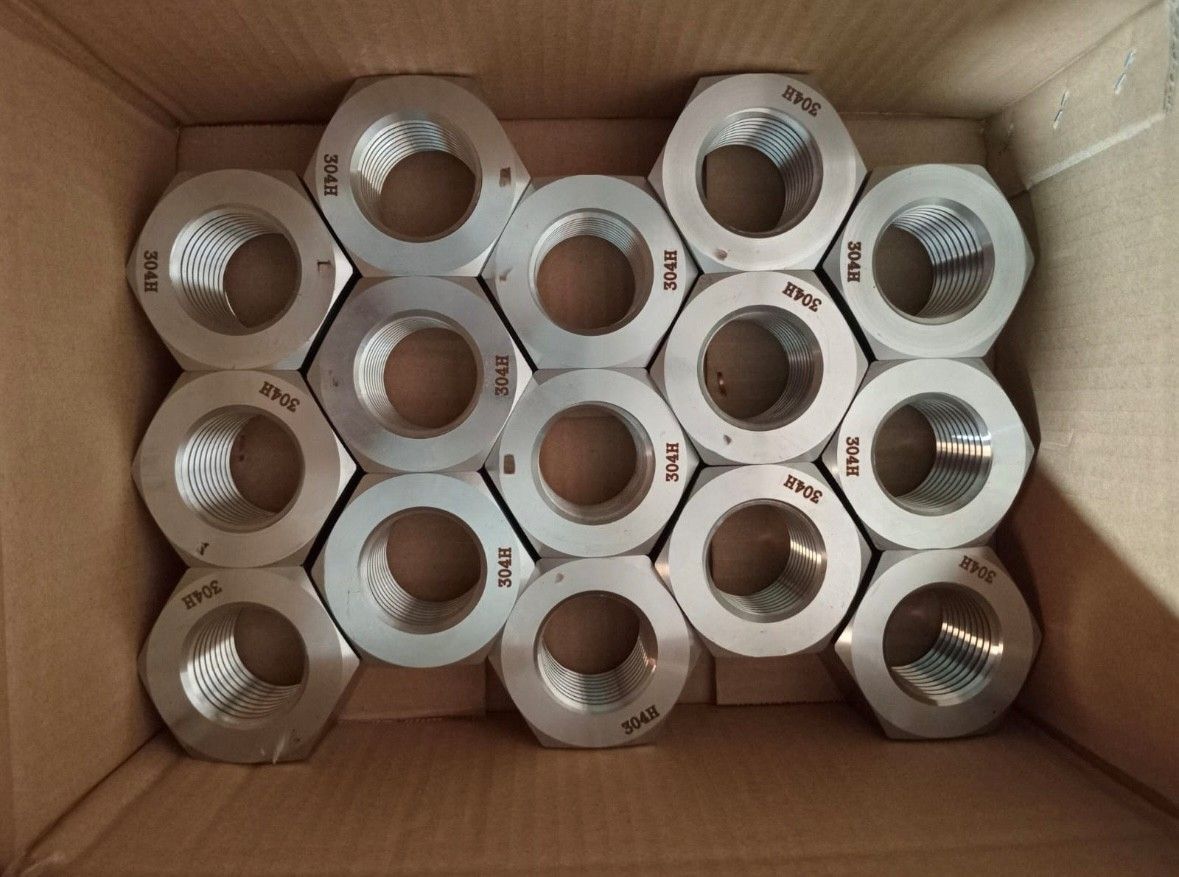
    Stainless steel heavy hex nuts and stud bolt components
    Austenitic stainless bolting components with heat number traceability
    EN 10204 3.1 Certified
    ISO 9001 Quality

    Overview

    ASTM A193 Grade B8 is 304 austenitic stainless and B8M is 316 with molybdenum added for chloride pitting resistance, which is why B8M dominates coastal, marine and chemical duty across Australian and Asia-Pacific projects. Both grades are supplied in two conditions that behave very differently. Class 1 is solution annealed, giving 515 MPa minimum tensile and 205 MPa minimum yield with excellent ductility and corrosion performance. Class 2 is strain hardened after annealing, raising tensile to 655 to 860 MPa and yield to 450 to 690 MPa depending on diameter, at some cost to ductility. Getting the class right matters more than most specifications acknowledge, because a Class 1 stud has less than half the yield strength of the Class 2 equivalent.

    Specifying B8M without stating Class 1 or Class 2 leaves the joint's yield strength undefined — the same grade delivers 205 MPa annealed or up to 690 MPa strain hardened.

    Typical Applications

    • Coastal and offshore flange bolting where chloride pitting is the governing risk
    • Chemical, fertiliser and mineral processing pipework connections
    • Water treatment, desalination and seawater cooling systems
    • Food, pharmaceutical and hygienic process equipment
    • Instrumentation, small-bore and utility bolting on hydrocarbon plant
    • Structural and equipment bolting where painting is undesirable

    Stainless Stud Configurations We Supply

    • B8 Class 1 and Class 2 continuous thread studs
    • B8M Class 1 and Class 2 continuous thread studs
    • Double-end stainless studs with defined grip length
    • Complete kits with A194 Grade 8 or 8M heavy hex nuts
    • B8T and B8C stabilised grades for elevated temperature service
    • Anti-seize or coating applied where the customer specification calls for it

    Common Materials & Grades

    ASTM A193 B8 (304)ASTM A193 B8M (316)ASTM A193 B8T (321)ASTM A193 B8C (347)ASTM A194 Grade 8 nutsASTM A194 Grade 8M nuts

    Standards & Documentation

    • ASTM A193/A193M Grades B8, B8M, B8T and B8C in Class 1 or Class 2 condition
    • ASTM A194/A194M Grade 8 and 8M for the mating heavy hex nuts
    • EN 10204 3.1 mill test reports with class condition and tested properties stated
    • Positive Material Identification available to confirm molybdenum content on B8M
    • Solution annealing and strain hardening records traceable to heat number
    • Thread inspection to ASME B1.1 Class 2A or ISO 261/965 as specified

    NEED MACHINED COMPONENTS TOO?

    Spacers, blinds, special nuts, shafts and bushes — supplied to your drawing with the same traceability as your bolting. Precision Machined Components →

    Class 1 versus Class 2: the decision that drives the joint

    Class 1 studs are solution annealed and left soft. They are the right choice where corrosion performance and ductility matter more than load, and where a heavily loaded joint would be a design error anyway. Class 2 studs are cold worked after annealing to raise strength, and the achievable strength falls as diameter increases because the amount of effective cold work drops in larger sections. That is why Class 2 properties are tabulated in diameter bands up to 1-1/2in. If a flange calculation was done against Class 2 numbers and Class 1 studs arrive on site, the joint is under-designed even though the material certificate says B8M.

    Galling and thread seizure on stainless bolting

    Austenitic stainless galls readily. Under load and relative motion, the passive oxide film breaks down and the mating thread flanks cold weld, which can seize a nut solid partway down a stud and require the joint to be cut out. Mitigation is procedural as well as material: use an approved anti-seize compound, tighten slowly and avoid impact tools, and consider a nut in a different alloy or hardness where the specification permits. We supply anti-seize and coated stainless bolting only where the customer specification nominates the system.

    Where B8M reaches its limits

    316 resists general corrosion and moderate chloride exposure well, but it will pit and suffer chloride stress corrosion cracking in hot, concentrated chloride environments — splash zones, seawater above roughly 50 C, and under-insulation conditions where chlorides concentrate. Where that risk is real, duplex 2205 or super duplex 2507 offers roughly double the yield strength with far better pitting resistance, and nickel alloys such as Inconel 625 or Incoloy 825 handle the most aggressive combinations of chloride, acid and temperature.

    Elevated temperature and stabilised grades

    Standard B8 and B8M are subject to carbide precipitation at grain boundaries during sustained service above roughly 425 C, which sensitises the material and reduces intergranular corrosion resistance. B8T (321, titanium stabilised) and B8C (347, niobium stabilised) tie up carbon as stable carbides and are the correct specification for hot service and post-weld exposure. EMG regularly supplies B8T and B8C studs with A194 8T and 8C nuts for refinery and power generation scopes where this matters.

    FREQUENTLY ASKED QUESTIONS

    Technical FAQs

    What is the difference between ASTM A193 B8 and B8M?

    +
    B8 is 304 austenitic stainless and B8M is 316, which adds around 2 to 3 percent molybdenum for markedly better resistance to chloride pitting and crevice corrosion. In coastal, marine and chemical service B8M is the normal choice; B8 suits milder environments.

    Should I specify Class 1 or Class 2?

    +
    Class 2 is strain hardened and much stronger, and is the usual choice for pressure-retaining flange bolting. Class 1 is solution annealed, softer and more ductile, and suits low-load or maximum-corrosion-resistance duty. Always state the class, because the yield strength difference can exceed a factor of three.

    Why do Class 2 properties change with diameter?

    +
    Strength in Class 2 comes from cold work applied after solution annealing, and the effective cold work achievable falls as section size increases. ASTM A193 therefore tabulates lower minimum tensile and yield values for larger diameters, with properties defined up to 1-1/2in.

    How do I prevent stainless stud bolts from galling?

    +
    Use an anti-seize compound approved for the service, tighten with controlled torque rather than impact tools, keep threads clean, and avoid reusing nuts that have already galled. Where the specification permits, a coated stud or a nut of differing hardness reduces the risk further.

    Are B8M studs suitable for seawater service?

    +
    For splash zone, hot seawater or concentrated chloride exposure, 316 is often marginal and can pit or suffer chloride stress corrosion cracking. Super duplex 2507 or a nickel alloy is the more reliable specification, and we supply both.

    Do you supply B8T and B8C for high temperature service?

    +
    Yes. B8T (321) and B8C (347) are stabilised grades that resist carbide precipitation in sustained service above roughly 425 C, and we supply them with matching A194 8T and 8C nuts and full certification.
    GET IN TOUCH

    Need a Quote for ASTM A193 B8 & B8M Stud Bolts?

    Send us the size, grade and quantity — or your drawings and bill of materials — and we'll return a technical quote for astm a193 b8 & b8m stud bolts with lead times and certification included.

    Emergency Support

    24/7 availability for critical projects